
Home » Amagai Blog

Category: Amagai Blog

Satoshi Amagai’s Blog : Country Risk

As announced in the What’s New section of our website, Global Health Exhibition—the Middle East’s largest healthcare exhibition, which was scheduled to begin on October 26 and expected to attract more than 150,000 visitors—has unfortunately been canceled. The cancellation follows concerns over deteriorating security conditions, including Houthi airstrikes on Riyadh’s airport since October 7. The official announcement states that the exhibition will “return next year,” and the dates have already been set for October 25–28, 2027. This illustrates just how dynamic emerging markets can be. Their ups and downs tend to be far more pronounced than those of developed markets. Having worked hard with JETRO and our local partner, Alfaisaliah/MMS,


Satoshi Amagai’s Blog : Failure Rates

One of the projects I was assigned in my first year at Sony was “failure rate prediction.” It’s been over 45 years, so my memory is quite fuzzy, but I believe the assignment was something along the lines of: “Develop a parameter analysis program to ensure that at least 95% of products pass inspection with 95% accuracy when exporting new products to the U.S.” Back then, there weren’t any decent off-the-shelf software packages available, so I basically wrote the program from scratch myself using the FORTRAN programming language. Also, since personal computers were not supplied to employees, I first wrote the rough program on paper, then go to a place

Satoshi Amagai’s Blog : 15th Anniversary of Our Founding

On December 6th, our company celebrated its 15th anniversary.We would like to express our sincere gratitude for the stern yet encouraging guidance and support we have received from all those involved. We continue to receive new inquiries, requests, and opportunities every day, which reminds us how quickly time passes.Thanks to your continued support, we have rarely experienced a “silent” period over these past 15 years.— That said, during the COVID-19 pandemic, communication with the rest of the world was temporarily disrupted. However, we devoted ourselves to restructuring our internal operations to meet the needs of that critical situation, and our daily activities remained as busy as ever. To summarize our

Satoshi Amagai’s Blog : multi-function vs. single-function

This “multi-function vs. single-function” issue might also be considered a type of trade-off, similar to what we’ve discussed in the past two sessions. Take smartphones, for example.Nowadays, many people feel they can’t live without their smartphones. Everything is packed into a single device through apps.As long as the phone is working well and in your possession, it’s incredibly convenient — it feels like you can go anywhere in the world with just your smartphone. However, if the smartphone malfunctions, runs out of battery, gets misplaced, or is stolen, it becomes a serious problem.Also, when too many apps are installed, it must be frustrating if you can’t quickly find and launch

Satoshi Amagai’s Blog : Trade-off between hardware and software

Following up on the previous discussion, I’d like to talk again about trade-offs from a business model perspective—specifically, the classic dilemma of “gaining on one side while losing on the other.” <Hard Business vs. Soft Business> Of course, in reality, the distinction isn’t this clear-cut. And if you ask, “So where does Mofiria stand?”—our core strength lies in our algorithm that can authenticate individuals with exceptional precision. From that standpoint, we fall under “soft.” However, to properly perform vein authentication, we need to integrate optical components such as LED lights (as near-infrared light sources) and CMOS sensor cameras (to capture vein images), along with a chip to run the algorithm—all

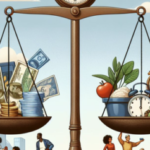
Trade-Offs

On a personal note, today, January 9th, marks six months since I underwent laparoscopic kidney surgery. I’ve written about various episodes from that time in a previous blog, so if you’re interested, please take a look: This time, I’d like to discuss something I’ve been contemplating since the very beginning of our vein authentication business, long before my hospital stay: trade-offs. A trade-off refers to a situation where achieving one goal means compromising another—essentially, a relationship where “you can’t have your cake and eat it too.” However, since its inception, mofiria has been advocating that our vein authentication technology resolves the trade-off between “high security” and “simplicity and convenience”, making

Thoughts on a 10-Day Hospital Stay 2

2. Hospital Security A couple of months before my recent hospitalization, I visited another large hospital to see a highly respected senior colleague. Even then, I had the same impression: Japanese hospitals operate under the assumption of inherent goodness in people. The fact that there aren’t frequent major incidents is, in a sense, remarkable and may even be something we can be proud of as it reflects the goodness and sincerity of the Japanese people. However, from a security standpoint against malicious individuals, it feels quite inadequate. *So far, I’ve been writing from the perspective of the peculiarities of “Japanese hospitals,” but since I’m not fully aware of the situation

Thoughts on a 10-Day Hospital Stay 1

A month ago, I had a hospital stay for about ten days for surgery. During that time, I had some impressive experiences related to advancements in medical technology and my main field of security. I’d like to talk about these in two parts. 1. Advancements in Medical Technology It had been about 25 years since my last proper hospital stay, and I must say that the latest medical technology is incredible. I underwent laparoscopic surgery assisted by a surgical robot, which is known for being less burdensome on the body. With a focus on the patient’s smooth recovery, the steps towards discharge progressed rapidly, in stark contrast to the old

Reflections on Two Recent Major Fraud Incidents

The embezzlement of a large amount of money from baseball player Shohei Ohtani’s account by former interpreter Ippei Mizuhara, and the theft of a gold tea bowl worth over ten million yen from Nihonbashi Takashimaya, were both big surprises from a “that can’t happen!” perspective. In both cases, I feel that using vein authentication could have prevented these incidents, and although it sounds like a promotion for Mofiria, I would like to comment. In case 1, ID and password can be logged in by anyone if they are leaked, but vein authentication makes impersonation impossible. It is also nearly impossible to create a fake, so Mizuhara would not have been

Finger Vein Recognition

Finger vein recognition is a sort of biometrics using finger vein patterns for verifying or identifying one person.

mofiria provides finger vein authentication devices and SDKs that combine the highest level of accuracy, speed and efficiency.

Biometrics and Security Blog
Amagai Blog